
Detroit Previous Residents Sources
A backward Detroit address trail changes with the era. Current Detroit assessment and map records establish the parcel and today's recorded owner or taxpayer. Wayne County deeds take the Detroit property record backward through transaction parties. Historical Detroit directories and census schedules add household clues, while Detroit maps and assessor cards help reconcile an address or structure. None is a complete list of everyone who lived at a place. Their value comes from documenting a role and date, then checking the next source in the chain.
| Detroit source | Documented coverage | Holding route | What it can show |
|---|---|---|---|
| BS&A and Parcel Viewer | Current administrative snapshot | Detroit Assessor and city map | Parcel, situs, owner or taxpayer, values, sale, zoning, and map context |
| Wayne deed web access | Public web claim from January 1, 1960 | Register of Deeds GovOS search | Recorded-document index and copy routes, subject to search level |
| Wayne electronic index and images | Electronic-index distinction from August 1986 | Register of Deeds and office access | Conveyance and mortgage research with documented index differences |
| Older tract and deed books | Before online coverage where relevant | Register of Deeds office or mail route | Earlier title research using legal descriptions and staff assistance |
| Archives assessor cards | Circa 1920-2000 | Archives of Michigan | Property, owner, and assessment history |
| Detroit directories and reverse books | Documented Burton and LOC runs | DPL Burton, LOC, and digitized catalogs | Historical address, household, firm, and occupation clues |
| Released federal census | Through 1950 under the 72-year rule | Library databases and census access | Dated household snapshot and relationship details |
| Sanborn maps | Detroit editions from 1884 through later twentieth-century years | LOC finder and DPL in-library access | Structure, lot, street, and use context, not occupants |
Start from the source nearest to the Detroit date in question. A post-1960 Detroit transfer may begin with the deeds route. A 1930 Detroit address may need a directory, census, assessor-card, and map sequence instead.
Detroit Deed Search Layers
The Wayne County Register of Deeds access page describes more than one way to obtain a Detroit record. The public web description reaches January 1, 1960, while the county distinguishes electronic index and imaging from August 1986 and describes conveyance and mortgage documents after 1960. The current GovOS system has a limited free name index and paid options for expanded searching, images, and copies. The office also provides kiosk and mail channels. Older Detroit work belongs in tract and deed books rather than being treated as a failed online search.
The Detroit access guidance is the reason to write down the document number, recording date, liber and page, and legal description early. Those details remain useful when a later Detroit search changes screens or the address changes form.
Wayne County documents a $15 search-by-mail route for older or staff-assisted Detroit property research. There is no phone or fax search route in the captured guidance. A request should state the Detroit address, parcel, legal description, names, and approximate time period as precisely as the available evidence allows.
Tracing Detroit Previous Residents
The Detroit deed chain identifies recorded transaction parties, not every person who occupied a house. Begin at the Detroit parcel, follow the current grantee back to the prior deed, then search the former owner as an earlier grantee. Use the legal description whenever a street number is missing or changed. The goal is a repeatable sequence of documents, not an unsupported claim about who was present on a particular day.
- Use Detroit BS&A or the Detroit Parcel Viewer to record the current parcel ID, situs address, owner or taxpayer field, and legal description.
- Search the Register of Deeds by the documented address, parcel or tax ID, legal description, or the known grantor and grantee names.
- Open the most recent deed and save the grantor, grantee, instrument type, recording date, document number, liber or page, and legal description.
- Search the seller as an earlier grantee, then repeat the process in reverse chronological order.
- When the online trail reaches its documented limit, request tract-book or deed-book help through the office, kiosk, or $15 mail route.
- Grantor
- The party transferring an interest in the recorded document.
- Grantee
- The party receiving the interest in the recorded document.
- Chain of title
- The sequence of recorded transfers used to track a property's documentary ownership history.
- Legal description
- The lot, block, subdivision, or metes-and-bounds description that can survive a street-number change.
Detroit Legal Description Bridge
Detroit address labels are helpful, but the parcel ID and legal description are the steadier bridge across a deed trail. Detroit's assessment detail can include property address, parcel number, owner and taxpayer information, sale history, land information, and legal description. A current owner's mailing address can be outside Detroit because it may belong to a business, trustee, tax agent, lender, or other responsible party. It should not be equated with the Detroit parcel's occupancy.
For a missing Detroit number or a corner property, compare the parcel geometry, the lot or block reference, and the deed description. A plat can supply the subdivision and lot-block reference needed to find a Detroit property when a historical record uses no current street number. This check also prevents a front-door address on one street from being confused with an entrance or legal reference on another.
Detroit's 1921 Address Bridge
Detroit's citywide re-numbering took effect January 1, 1921. The documented Detroit 1920-21 directory reprint places old and new reverse addresses in volumes five and six, pages 2357-2807. Translate an earlier Detroit number before searching a modern parcel database, deed index, or later address directory. Keep the old number, translated number, old street name, current street name, volume, and page separate until the Detroit parcel connection is supported.
Detroit's 1921 street-name-change records can help when the road itself is the problem. This address-history step is often what makes an apparently missing Detroit household searchable.
Detroit Previous Residents Directories
Once the historic address has been translated, reverse directories can provide the household layer that deeds do not. Burton's Detroit holdings include 1845-46 and 1850-1941, plus selected later east or west issues. The Library of Congress inventory lists street-address directories for 1942, 1944-45, 1953-74, 1977, and 1980-81, and criss-cross coverage for Detroit City in 1946 and 1976-94. These are irregular sources, so preserve the year and edition with every name.
Use the Library of Congress criss-cross inventory to identify documented Detroit reverse-address editions.
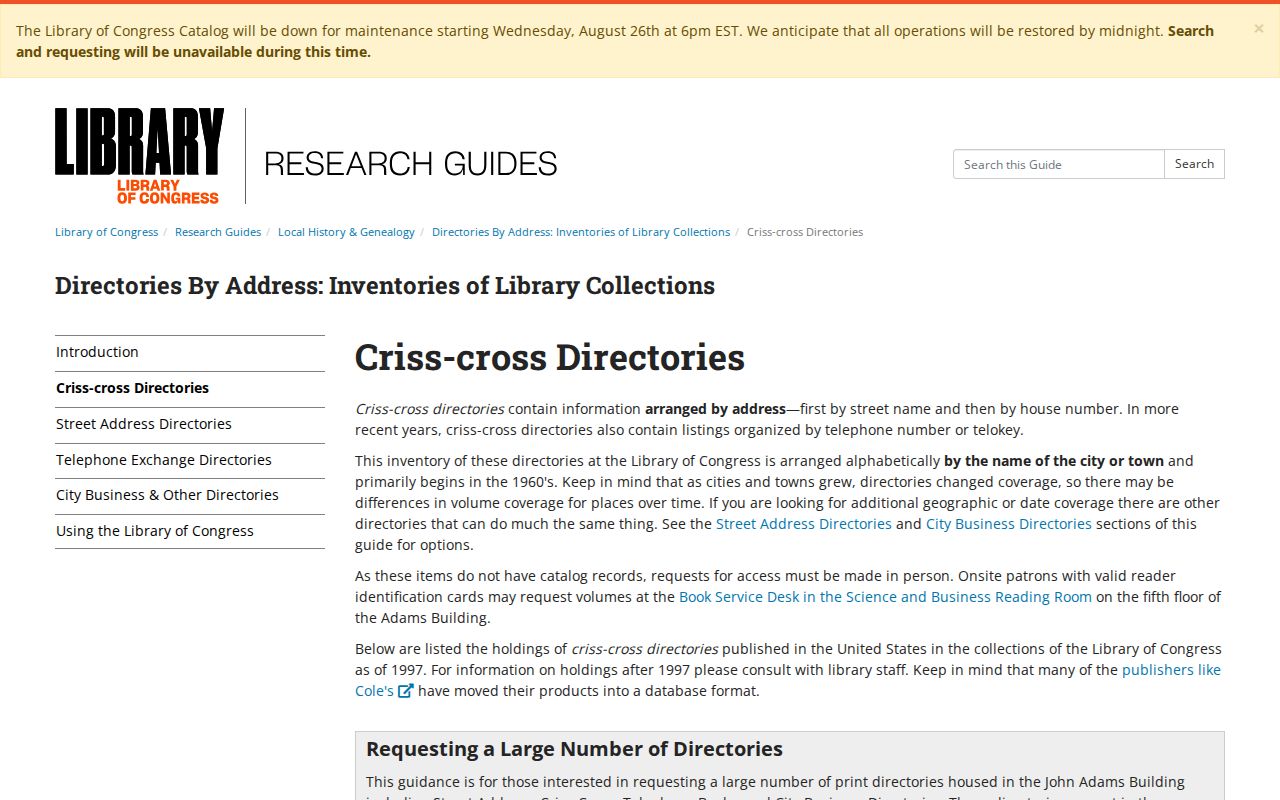
A reverse entry can connect an address to a listed person for that edition. It remains a historical listing, so it needs corroboration before it is used as a conclusion about another year.
The collection details and entry-reading conventions are covered more fully on the Detroit city directory page. Here, the reverse books serve one purpose: placing a household clue into the address timeline.
Detroit Census Pairing
Pair a Detroit directory sequence with the nearest released federal census, not with a guessed year. Census schedules are released under a 72-year rule, so 1950 is the latest public schedule. A census can identify household composition, age, birthplace, relationship, and an occupation field. A Detroit directory can preserve an address and an urban year-by-year clue. The sources were created on different dates, so a Detroit difference may reflect timing rather than an error.
- Choose the directory years around a released census year such as 1900, 1910, 1920, 1930, 1940, or 1950.
- Record the printed address and all household wording from the directory, including a firm or home notation where present.
- Compare the census household only after confirming the street, number, surname variation, and date fit.
- Use an obituary, death index, probate file, or later deed to test a disappearance from the address sequence.
Burton's Detroit death-index and newspaper materials can turn a late household clue into a Detroit probate or cemetery question. A death notice is a lead, not a substitute for the official file.
Detroit Assessor Cards and Maps
Archives of Michigan lists Wayne County assessor cards circa 1920-2000, series RG 2015-132. They can bridge the period between historic Detroit directories and modern Detroit assessment tools. Request the series with the Detroit parcel or address, approximate dates, and historical number variants. Record whether a card is indexed by parcel, owner, or address before deciding that a missing card has meaning.
The Library of Congress Sanborn research guide is the documented finder for Detroit map volumes and editions.
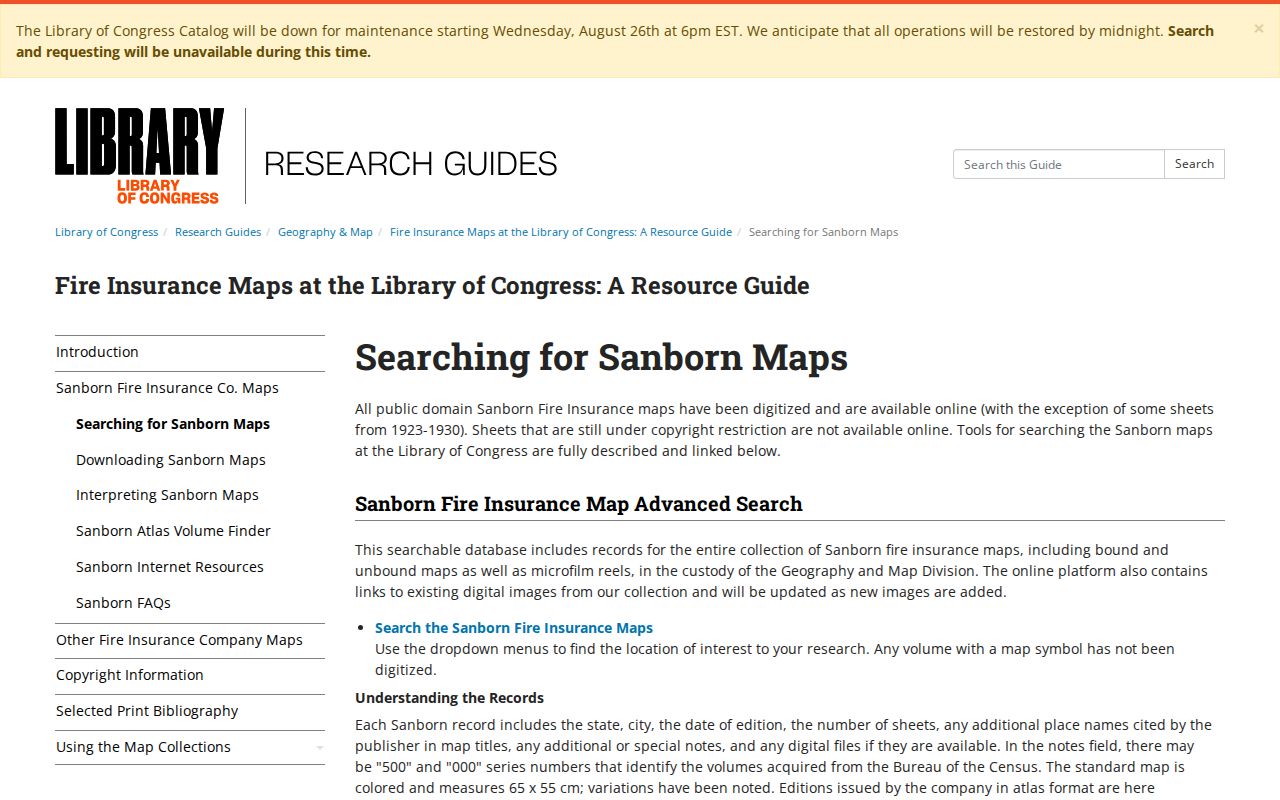
Detroit Sanborn maps can compare a structure's footprint, stories, materials, lot shape, use, alleys, and nearby addresses across editions. They do not identify occupants. DPL's Detroit Digital Sanborn access is documented as in-library computer access, another reason to separate structural history from household evidence.
Detroit Permit and Probate Clues
Detroit BSEED permit records can date Detroit construction or alteration. Accela searches separate address, parcel, owner, record information, and licensed-professional modes. The documented search advice is to begin with street number and street name, leaving extra fields blank if a narrow query fails. Permit material may show application date, scope, valuation, inspections, and certificate information. It is evidence about physical work, not a complete Detroit household account.
When a Detroit household disappears from a historical address, use Burton's obituary and death-index resources, Detroit newspapers, cemetery clues, Wayne Probate, and the next recorded conveyance. Detroit probate can identify an estate, heirs, executor, inventory, mailing details, and a later property transfer. Each fact still needs its own source and date.
Detroit Previous Residents Alert
For a current Detroit property-interest question, Wayne County's GovOS Property Alert is a separate, free service that notifies a subscriber when a name or entity appears in a Wayne County real-property recording. The County published its notice on August 15, 2025. A Detroit alert can flag a new document to review, but it does not prevent a recording and does not replace examining the instrument or its legal description.
This is a useful Detroit date-stamped reminder that the historic trail and the current recording stream are different tasks. Preserve the Detroit portal access date and the recording date for the document.
Detroit House-History Limits
Detroit does not have a single verified public roster for every address over time. The Detroit factual record can distinguish owner, taxpayer, grantor, grantee, directory entry, map feature, permit party, and census household. It cannot safely convert each of those roles into a statement about present Detroit occupancy. Follow the access rules of each custodian and acknowledge gaps in the deed, directory, assessor-card, or census sequence.
Michigan's Address Confidentiality Program gives qualifying people at risk a substitute address and mail-forwarding route. If a trail appears intended to identify an ACP participant, a survivor, or someone who has asked for no contact, stop the search rather than trying to reverse the protected address.
Note: A clean address history records what each source establishes, then leaves unsupported links and missing years plainly unresolved.