
Finding Detroit Residents by Record
Detroit has no single official list of every person who lives in the city. The useful route depends on whether the starting point is an address, a name, a court matter, or an earlier household. The City Assessor and Parcel Viewer are strong address anchors. Wayne County's deed records identify parties to property transactions. Michigan's voter system is an identity-directed service, while Burton Historical Collection supplies older directory, newspaper, map, and family-history material. Each source answers a narrower question than a general people list.
Match the result to its role. An assessment record can identify an owner or taxpayer. A deed can identify a grantor or grantee. A directory can place a household at an address for a particular edition. Those facts can overlap, but they are not interchangeable proof that a named person is at an address today.
- For a current address, begin with the city parcel record and preserve the parcel ID.
- Check the owner or taxpayer against a recorded deed or a dated sale record.
- Use the Michigan voter tool only with its required identity fields and only for its stated purpose.
- For an earlier household, compare a Detroit directory, a newspaper, and a released census year.
- When an official record is not online, ask the custodian for its office, mail, kiosk, or written-request route.
Detroit Resident Records Offices
Detroit sits in Wayne County and is the county seat, so city, county, and state systems all matter. The Assessor is the address-to-parcel starting point. The Register of Deeds maintains the title trail. The Michigan Voter Information Center provides a personal voter lookup and election information. For births, deaths, marriage records, and county court material, the Wayne County Clerk is the local custodian. Use the office that created the record instead of treating one result as a complete residents directory.
Wayne County Register of Deeds
Official Records Search
Detroit, Michigan
Detroit Office of the Assessor
2 Woodward, Suite 130
Detroit, MI 48226
313-224-3035
Michigan Bureau of Elections
State voter information service
Michigan
Detroit Parcel Search Fields
The City of Detroit's BS&A entry point accepts an address, a name, or a parcel number. Its detailed services can expose assessment, current tax, sale, building, land, and taxpayer information when available for a record. The Parcel Viewer supplies a map route: search an address or parcel ID, then click the parcel to inspect the public snapshot. A parcel ID is especially worth saving because it can connect city assessment details to the county title trail.
| BS&A mode | Address, name, or parcel number |
|---|---|
| Parcel Viewer route | Address or parcel ID, then map selection |
| Useful public fields | Parcel, owner or taxpayer, legal description, sale and value details where shown |
| Important limit | Owner and taxpayer fields do not establish every occupant |
Detroit's Office of the Assessor describes the assessment service and links to the property-search route.
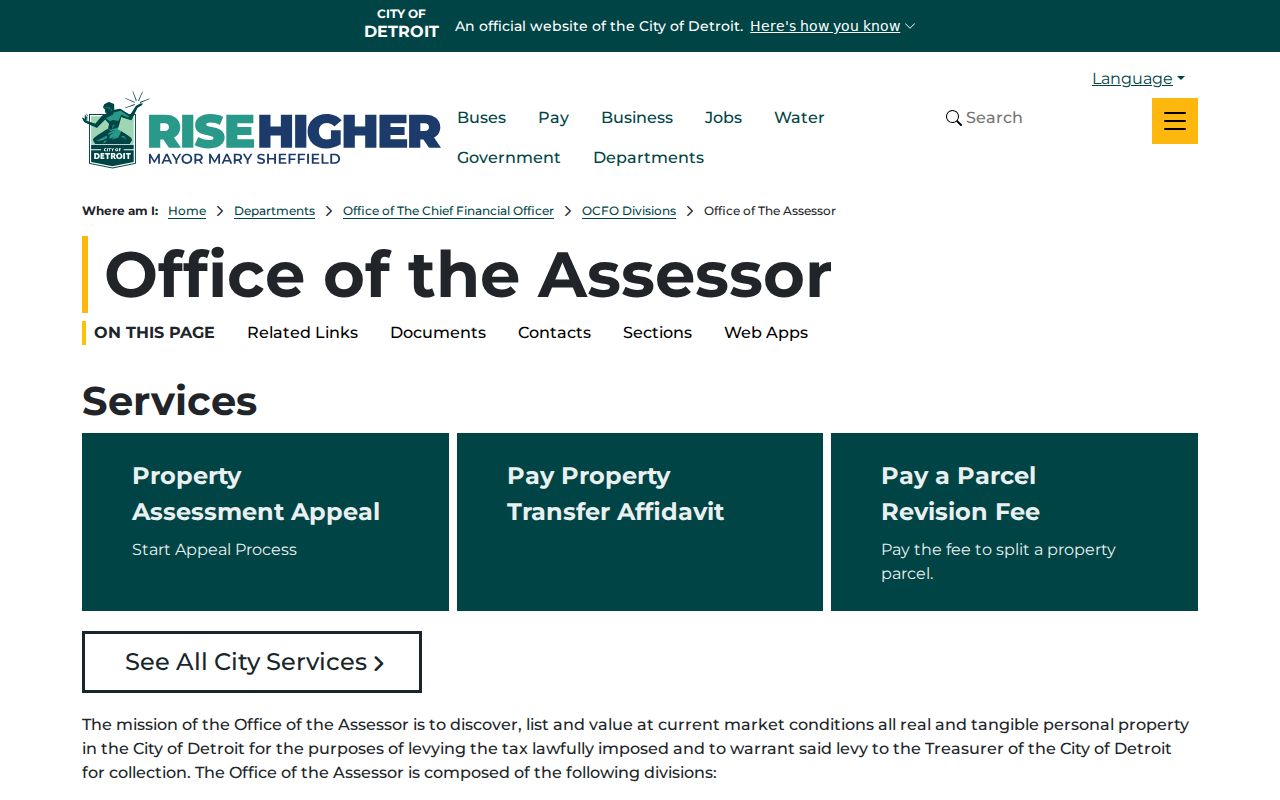
The city page is the bridge to the public assessment system. Check the tax year and access date because parcel and assessment updates do not always appear at the same time.
Detroit Voter Lookup Boundaries
Michigan Voter Information Center is not a browseable Detroit household roster. The name form requires first name, last name, birth month, birth year, and ZIP code. Its separate address form is for early-voting and clerk information. Michigan's public qualified voter file has a defined request process and a defined set of redactions. It can include address, status, registration date, voter ID, birth year, and requested voting history in the approved scope, while sensitive identifiers stay withheld.
Michigan Voter Information Center is the official start for checking the person's own registration details and local election information.
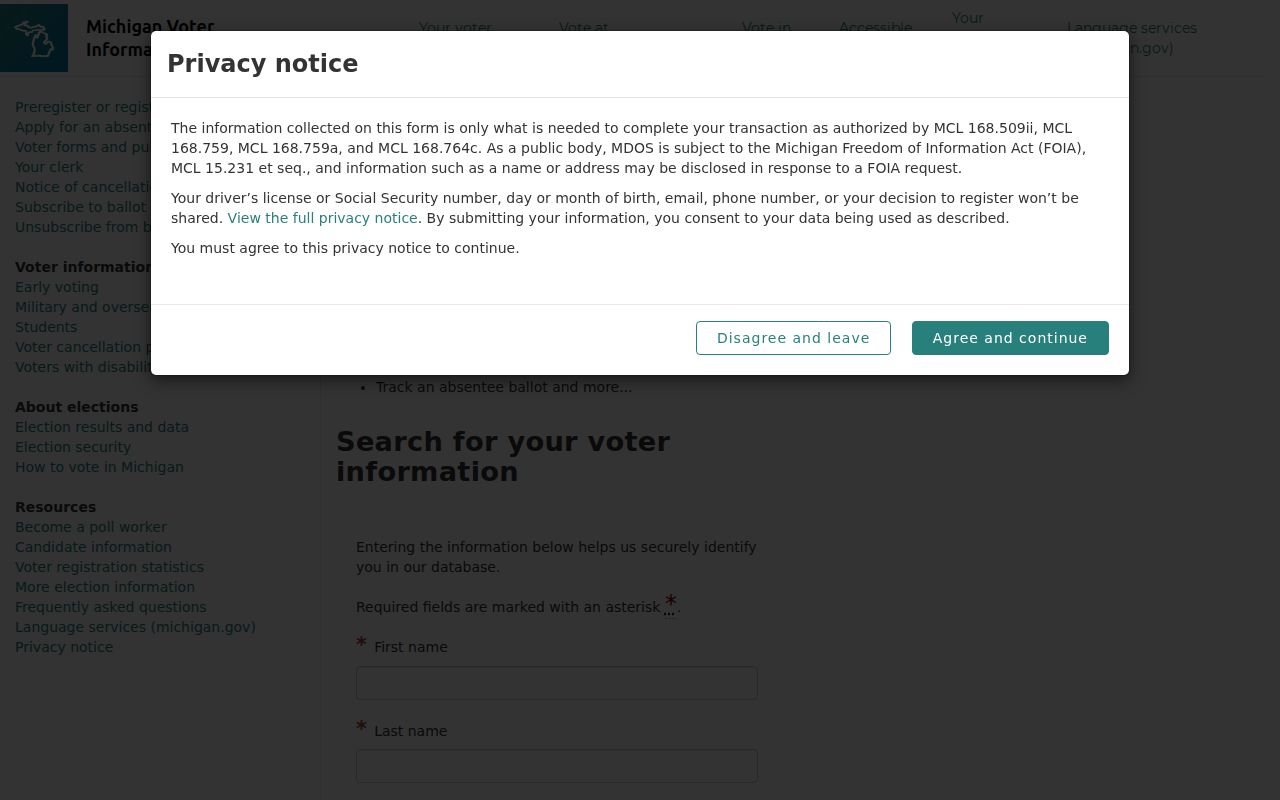
The required fields make the service a confirmation tool. Keep a result's access date and do not turn a voter record into an open street-by-street Detroit residents directory.
Current Detroit Resident Directory Sources
Current Detroit directory work relies on several records with different custodians. A property roll can show the party responsible for a parcel. A deed index points to a recorded transaction. A court index may identify a party in one court's public case set. A voter route has controlled access. None is a master population list, and each should be read with its own date and limit in view.
| Detroit source | What it can establish | Custodian | Access route |
|---|---|---|---|
| BS&A assessment | Parcel owner or taxpayer, situs, values, and some sale fields | Detroit Assessor | Public property portal |
| Parcel Viewer | Parcel ID, map context, zoning, adjacent parcels, and public snapshot | City of Detroit | Public map |
| Official Records Search | Grantor, grantee, instrument, date, and legal description | Wayne Register of Deeds | Free limited index; expanded routes vary |
| MVIC or public QVF request | Voter-record fields within Michigan's public and redacted scope | Michigan Department of State | Identity lookup or written request |
| 36th District Court inquiry | Public case and register-of-actions information for that court | 36th District Court | Online inquiry; no document images |
A name question needs at least two matching attributes, such as a middle initial and time period, before records are joined. The more detailed Detroit resident lookup workflow keeps owner, court party, directory occupant, and business role distinct.
Detroit Deed and Court Trails
The Wayne County Register of Deeds connects a property to recorded instruments. The free web layer supports a limited name index. The county describes public web search to January 1, 1960, while its electronic-index description distinguishes later electronic coverage. Address, legal-description, parcel, and image routes can require the current paid service or an office request. Older work may mean tract books or deed books at the office, not a failed search.
Detroit's 36th District Court Case Inquiry is a different kind of source. It generally provides public case information from 1990 forward, is limited to that court, and does not provide document images. Wayne Third Circuit Odyssey, MiCOURT, federal PACER, and probate records each have their own coverage. A court name match is an index lead, not a finding about a person.
Record roles matter. A grantor transfers an interest and a grantee receives it. A court docket is the event list for a case. Neither label proves present residence.
Detroit ZIPs Need Parcel Checks
A Detroit ZIP code is a postal key, not a city-limit or neighborhood boundary. The captured Michigan map identifies many Detroit labels, including 48201 through 48238. Border and institutional addresses need an address-level check. ZIP 48212 deserves special care because it is associated with Hamtramck as well as nearby Detroit delivery addresses. Use USPS for delivery assignment, then use the Parcel Viewer or Wayne County GIS to confirm the municipality and parcel.
Historical directories often predate the five-digit ZIP system. Search an old Detroit street and year first, then use a current ZIP only as a separate orientation clue. Street-level parcel work belongs on the Detroit street directory page.
Detroit Directory Collections at Burton
Detroit Public Library's Burton Historical Collection is the main local fallback for an earlier household. Its holdings include books, manuscripts, maps, newspapers, photographs, family histories, church records, military material, obituaries, and land records. Burton's Detroit directory sequence is substantial but uneven: 1845–46 and 1850–1941, followed by selected east or west editions from 1953 through 1974. A missing entry may reflect a gap or a different side edition rather than a move.
Library of Congress locators add Detroit reverse/address directories for 1942, 1944–45, 1953–74, 1977, and 1980–81, plus criss-cross coverage for 1946 and 1976–94. FamilySearch and digitized early volumes add another route. Detroit city directory collections need the abbreviation key from the volume being read.
Detroit's 1921 Address Bridge
Detroit's citywide renumbering took effect on January 1, 1921. That detail changes historical address work. A pre-1921 house number may not work in a modern parcel search, even when the street is correct. The 1920–21 directory reprint has reverse old-and-new address material, and the Department of Public Works map archive keeps a 1921 street-name-change folder. Record the old number, new number, street name, volume, and page separately before connecting a historic listing to a current parcel.
This is also a useful check against false negatives. A historic address that seems absent can be a numbering problem, a renamed street, a corner-lot entrance, or a directory edition issue. Sanborn maps and assessor cards can then test the physical parcel context without claiming that a building identifies a current household.
Detroit Resident Privacy Stops
Public availability has limits. Michigan voter records exclude driver's-license and state-ID numbers, month and day of birth, phone, email, digitized signatures, and Social Security fragments from the public file. Birth records less than 100 years old have a separate eligibility rule. A property taxpayer address can differ from the parcel situs and can belong to a business, trust, lender, or prior owner. Sealed, confidential, juvenile, and other protected court material remains unavailable.
Use records lawfully. Do not use any Detroit record path to stalk, harass, intimidate, or harm someone. Michigan's Address Confidentiality Program provides a substitute-address route for qualifying people facing physical-harm risks, and that protection must not be defeated by combining records.
Detroit Public Record Requests
When a documented record has no online index, use the correct custodian's request channel. Michigan Freedom of Information Act, 1976 PA 442, MCL 15.231 et seq., calls for a written request that describes the sought record. Agencies generally have five business days to respond, with a possible ten-business-day extension. Permitted charges can include search, review, separation, copying, and mailing. A request needs enough detail to let the office find the record without guessing.
For a Detroit Police record, a name alone is often too broad. Include a date window, location or intersection, incident type, report number if known, and relevant names. The city may lawfully redact material for privacy, investigations, juveniles, confidential sources, or other statutory reasons.
Detroit License and Registry Scope
A public license or business filing can confirm a role and date, but it does not establish a private residence. Michigan's LARA search covers many profession and business categories, and its certified verification route is separate from the free search. Michigan's MiBusiness Registry, launched in 2025, supports entity, individual, ID, and filing routes. Treat a registered office or an organizational role as business information, not a home-address conclusion.
Michigan's license search is the official starting point for a regulated credential or business role.
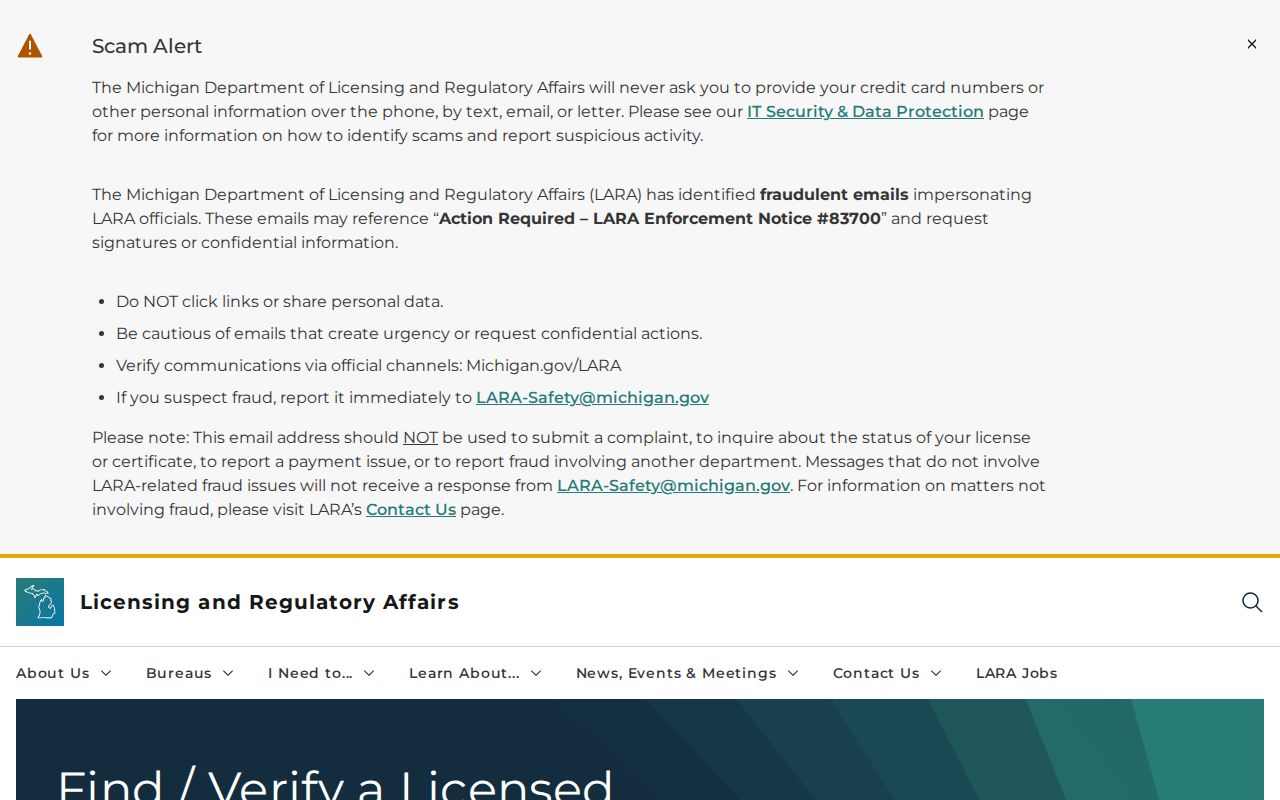
Use the result's status, issue or expiration date, and the relevant role. A current label should always carry the search date because license and entity records change.
Detroit Safety Systems Have Limits
Michigan's public safety systems answer narrow questions. MDOC OTIS covers current prisoners, parolees, probationers, and people within three years after discharge. It does not cover county jail or city lockup populations. The public offender registry has its own statutory coverage, search tools, and exclusions. A no-result in either system is not a broad conclusion about a person, and a public result should not be copied into a general directory.
MDOC OTIS is limited to its documented state-corrections population.
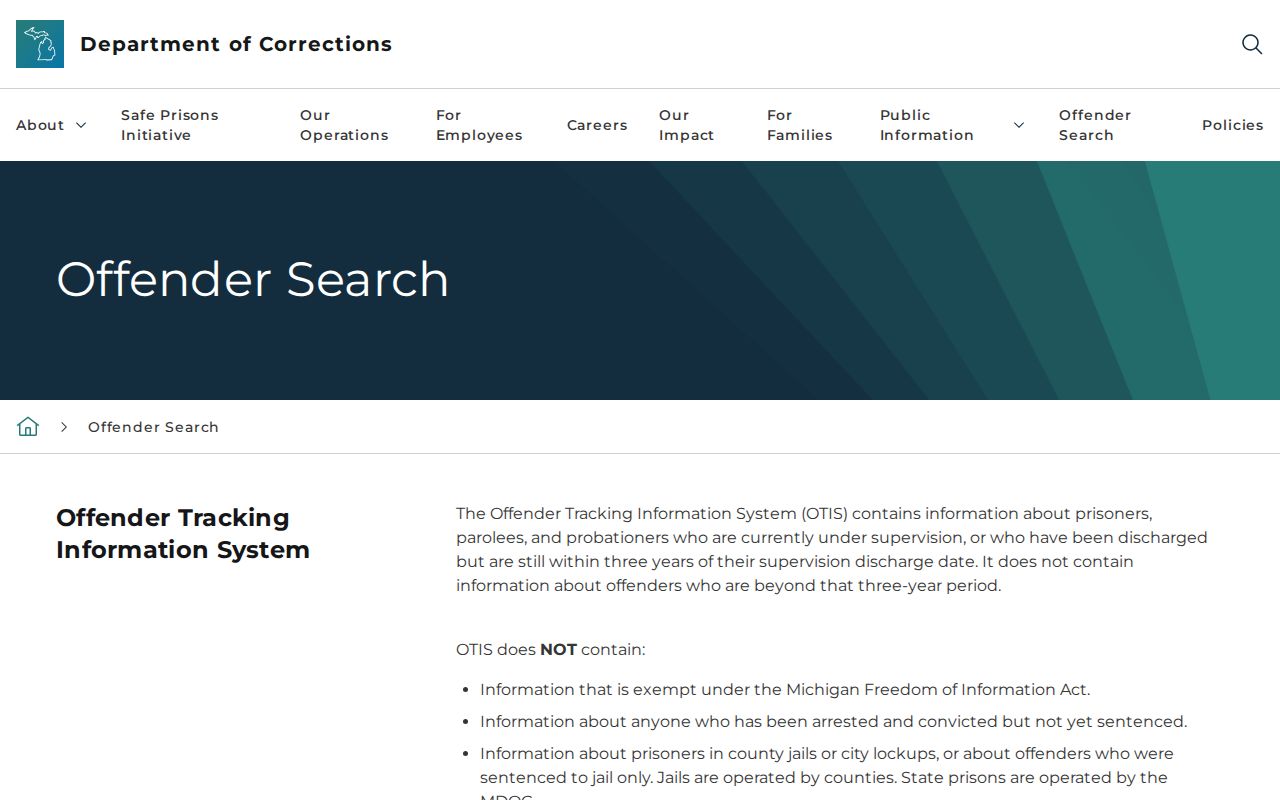
The system's coverage window explains why an absent result may simply fall outside its purpose. Preserve the search date and compare only non-sensitive identifiers that the official system exposes.
Michigan State Police Public Sex Offender Registry offers name, city, county, ZIP, and radius search routes for its statutory registry.
The registry is not a substitute for a court docket, a state criminal-history response, or an investigation. Its limits should be read before interpreting a result.
Historical Detroit Resident Directories
Detroit directory research is strongest when each year is treated as a dated snapshot. A typical entry may contain a surname, given name or initials, an occupation or firm, an address, and a home marker. The 1912 FamilySearch example, “Wm. H. King (King & Bergmoser), h 1361 Van Dyke Av.,” shows why the abbreviation key in each volume matters. It is historical evidence for that edition, not a present-day identity claim.
The Burton Historical Collection at 5201 Woodward Avenue offers the local shelf, research help, and databases. Its listed hours and access conditions can change, so check before visiting. Pair a directory with a released census schedule, newspaper, obituary, probate record, or deed only after checking the date in each source.
Detroit Property Alerts and Dates
Wayne County's GovOS Property Alert, introduced in 2025, lets a person receive a free notification when a name or entity appears in a Wayne County real-property recording. It is a monitoring tool, not a guarantee of title or identity. Read the recorded instrument, document number, date, and legal description before acting on an alert.
Detroit assessment and GIS information also has a timing layer. BS&A rolls into a new tax year while GIS parcel-boundary revisions follow their own annual cycle. A responsible Detroit residents directory search keeps the record date, tax year, and access date together instead of presenting a changing field as permanent fact.
That habit applies beyond property records. Detroit Public Library database access can be limited to library computers or require a card, and Burton reading-room hours can change. Court inquiry screens can add maintenance or scam notices. Michigan's voter public-file rules have also been the subject of recent privacy litigation, while the stable practical point remains the same: sensitive identifiers are withheld and a result must be read within the field set the custodian authorizes. Save the page title, agency, URL, date, and exact search mode with any useful result. If a portal changes or fails, use its named office, mail route, kiosk, or records-request procedure rather than an unofficial substitute.